
Table of Contents
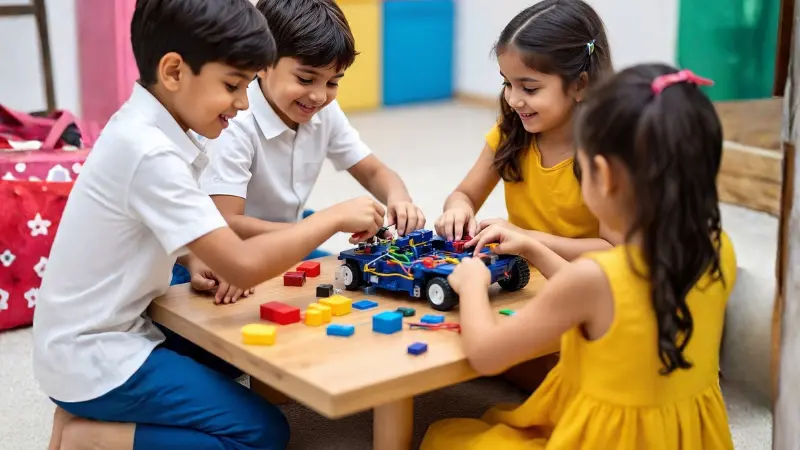
In today’s fast-changing world, children are growing up surrounded by technology. From smartphones to smart homes, machines and automation have become a natural part of daily life. This is where robotics STEM education for kids plays a crucial role.
Many parents hear terms like STEM robotics, robot coding, or robotics learning kits and wonder:
Is robotics really useful for my child? Is it too difficult? At what age should my child start?
This guide answers all these questions in simple language. It helps parents clearly understand what STEM robotics education is, why it matters, and how children can learn robotics step by step. Robotics STEM education also helps children develop problem-solving ability, logical thinking, and creativity from an early age.
What Is Robotics STEM Education ?
STEM robotics education is a learning approach that combines:
- SCIENCE
- TECHNOLOGY
- ENGINEERING
- MATHEMATICS
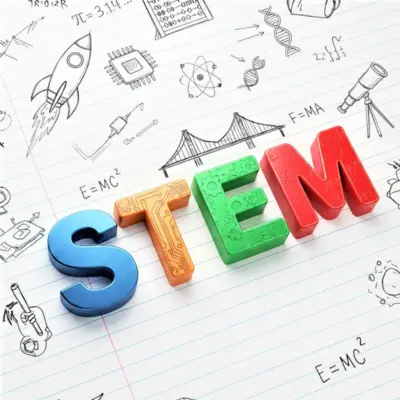
Instead of only reading textbooks, children build robots, assemble parts, connect sensors, and program movements. Through this practical process, they learn how real-world technology actually works.
In simple words:
STEM robotics education teaches kids how machines think, move, and solve problems—by letting them build and control robots themselves.
STEM Robotics Explained in Simple Terms
Many parents think robotics means complex coding or advanced engineering. That’s not true.
Modern STEM robotics kits for kids are designed to be:
- Age-appropriate
- Safe
- Easy to understand
- Fun and engaging
For younger kids, robotics may involve:
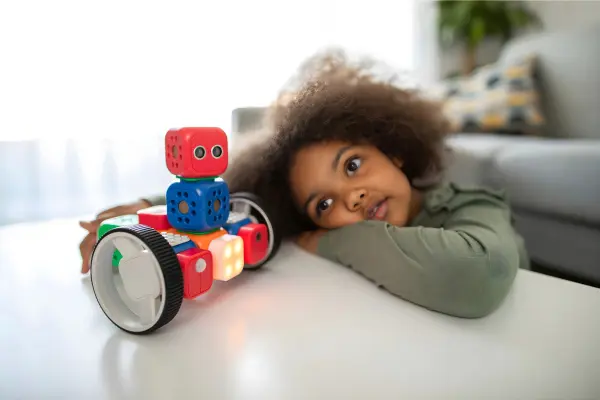
- Building simple mechanical models
- Using blocks, wheels, and motors
- Learning basic logic without coding
For older kids, robotics gradually includes:
- Visual block-based coding
- Sensors and automation
- Logical thinking and problem-solving
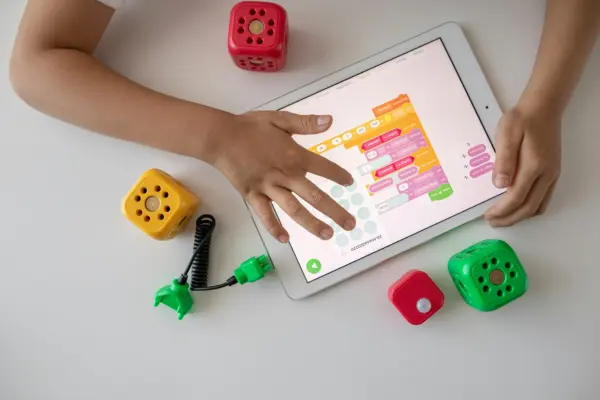
So robotics learn happens step by step—just like learning mathematics or language.
Why Robotics STEM Education Is Important for Kids
1. The Future Is Technology-Driven
Careers of the future will increasingly involve:
- Automation
- Artificial Intelligence
- Robotics
- Data and technology
Even if a child does not become an engineer, understanding robotics and STEM concepts will help them adapt confidently to future careers.
2. Robotics Builds Problem-Solving Skills
When a robot does not move as expected, children learn to:
- Identify the problem
- Test solutions
- Try again
This process builds:
- Logical thinking
- Patience
- Analytical skills
These abilities are useful in every profession, not only engineering.
3. Learning by Doing Is More Effective
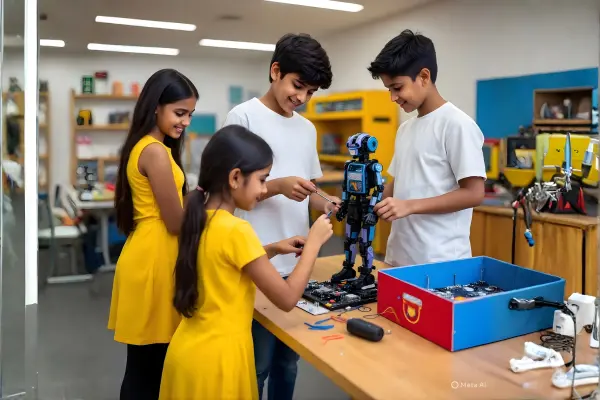
Robotics education focuses on hands-on learning.
Children remember concepts better when they:
- Build something themselves
- See immediate results
- Learn through trial and error
That is why robotics STEM education is considered one of the most effective learning methods.
To explore the detailed advantages of robotics education for children in India, read our complete guide on the powerful benefits of robotics for kids.
What Do Kids Learn Through Robotics STEM Education?
Here’s what robotics STEM education teaches beyond machines:
✔ Logical Thinking
Children understand how one action leads to another.
✔ Creativity
Robotics encourages kids to design, modify, and improve their own ideas.
✔ Teamwork
Many robotics activities are done in groups, improving communication skills.
✔ Confidence
Building a working robot gives children a strong sense of achievement.
Robotics Learn: At What Age Should Kids Start?
One of the most common questions parents ask is about age.
Ages 4–6
- Building blocks
- Simple mechanical toys
- No coding, only exploration
Ages 7–9
- Simple robotics kits
- Motorized models
- Introduction to logic
Ages 10–14
- Coding-based robots
- Sensors and automation
- STEM projects and competitions
So robotics learn can start early and grow naturally with the child.
STEM Robotics vs Traditional Learning
| Traditional Learning | STEM Robotics Education |
|---|---|
| Theory-based | Practical & hands-on |
| Memorization | Understanding |
| Fixed answers | Experimentation |
| Less engagement | High engagement |
Robotics and STEM learning together help children connect theory with real-world applications. Robotics complements school education and makes learning meaningful and enjoyable.
All About Robotics Kits for Kids
To start robotics learning at home or in schools, robotics kits are the best option.
Good robotics kits:
- Use real components (motors, gears, sensors)
- Are reusable and expandable
- Follow a structured learning path
In India, popular and trusted robotics kits include:
- Indian brands focusing on STEM education
- Kits aligned with school-level understanding
- Products designed for Indian classrooms and homes
This guide is all about robotics learning foundations. These kits are easily available online and are suitable for future Amazon affiliate recommendations.
How Parents Can Support Robotics Learning at Home
Parents don’t need technical knowledge to support their child.
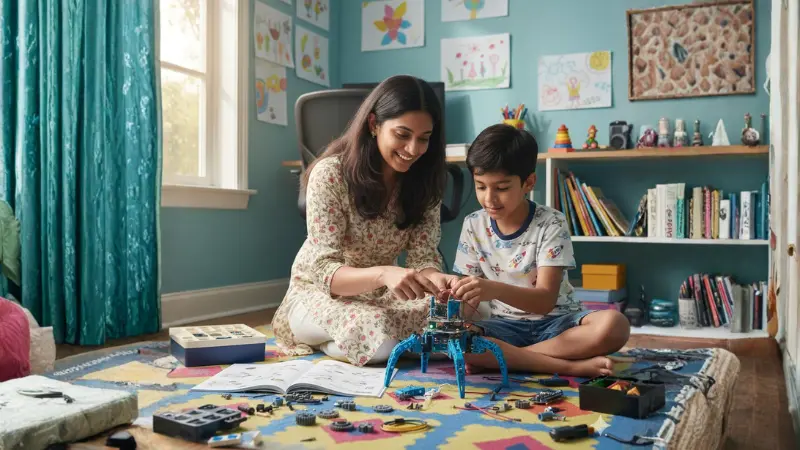
Here’s how you can help:
✅ Encourage Curiosity
Let your child explore without fear of mistakes.
✅ Avoid Over-Helping
Let them struggle a little—it builds confidence.
✅ Choose Age-Appropriate Kits
Start simple and move gradually to advanced kits.
✅ Focus on Learning, Not Speed
Robotics is about understanding, not finishing fast.
Robotics and STEM in Indian Education
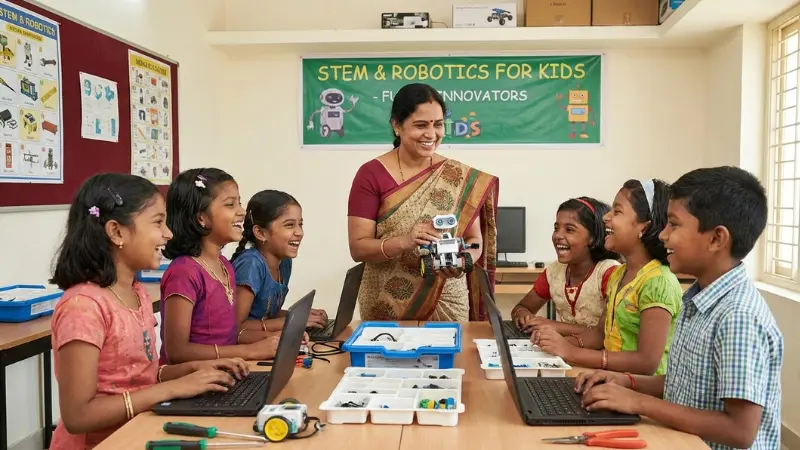
India is slowly adopting robotics and STEM education through:
- NEP 2020
- School robotics labs
- Coding and tinkering programs
According to India’s National Education Policy (NEP 2020), experiential and hands-on learning such as STEM and robotics is strongly encouraged from an early age.
Many schools now recognize robotics as a key skill for future readiness. Learning robotics early gives Indian students a global advantage.
Is Robotics Only for Future Engineers?
Absolutely not.
Robotics helps children who may become:
- Doctors
- Architects
- Entrepreneurs
- Designers
- Scientists
- Even artists
Robotics STEM education develops thinking skills, not just technical skills.
Final Thoughts: Is STEM Robotics Education Worth It?
Yes—without any doubt.
STEM robotics education for kids:
- Builds future-ready skills
- Makes learning fun
- Improves problem-solving ability
- Encourages creativity and confidence
Starting early with the right robotics kits can give your child a strong foundation—not just in technology, but in thinking smartly and confidently.
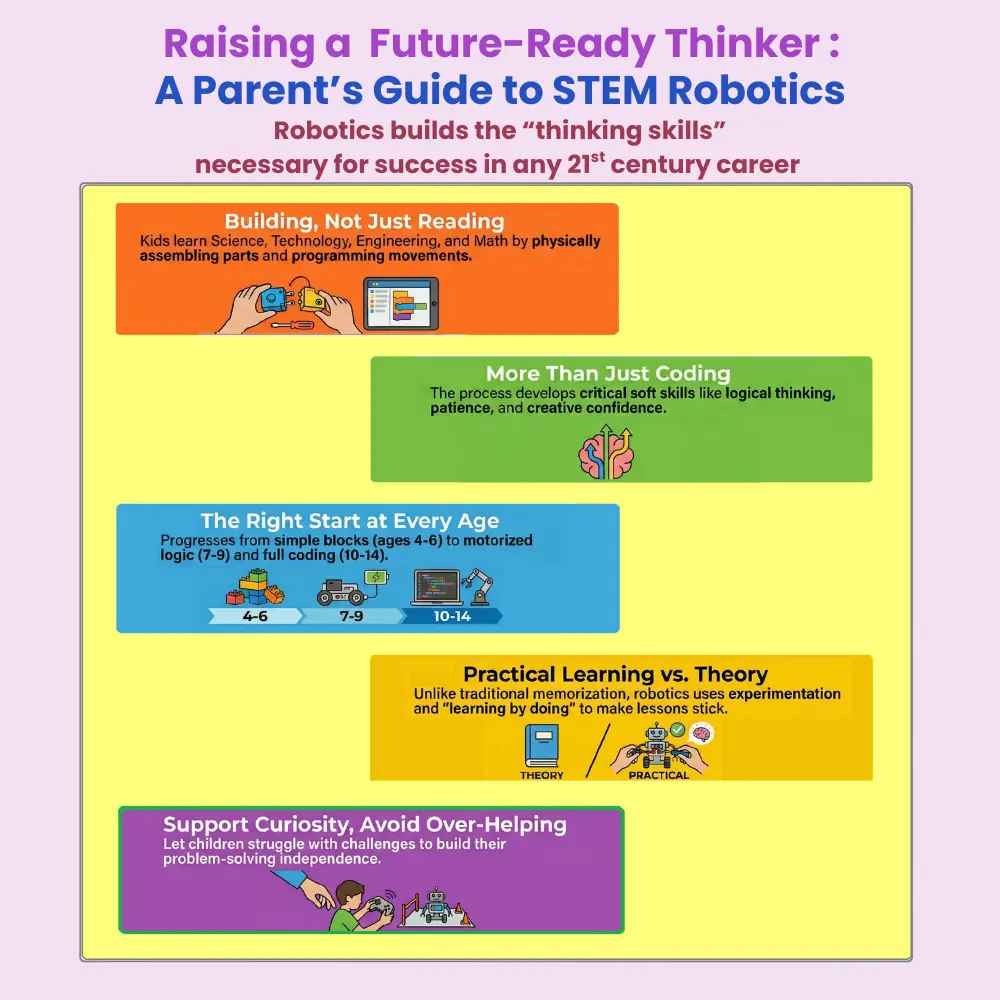
If you are a parent looking to introduce your child to STEM robotics, starting with a good learning kit is one of the best decisions you can make.

Samir Sen is a retired Indian Railways Signalling Engineer with over 30 years of experience in railway signalling systems and safety operations. He also served as a faculty member at a Zonal Signalling Training Institute of Indian Railways, delivering theoretical and practical training in signal engineering. Through SSEN Techno, he simplifies robotics and STEM education for learners and beginners.
Pingback: 10 Powerful Benefits of Robotics for Kids in India